The case for a shared schedule
Flexibility sounds kind. For many learners, a schedule they share with a group is what turns "someday" into "this week".
In this article
“Someday” is not a date Link to ““Someday” is not a date”
Self-paced courses promise that learners can go at their own speed. For a motivated few, that's exactly right. For many, "my own pace" turns out to mean "later", and later keeps moving.
A schedule replaces an open-ended intention with a specific week. It isn't about pressure. It gives people something to plan their evenings around, and something to tell their manager or family when they need the time.
Deadlines aren't the opposite of flexibility. They're what makes the time real.
How a cohort keeps time in Sublime LMS Link to “How a cohort keeps time in Sublime LMS”
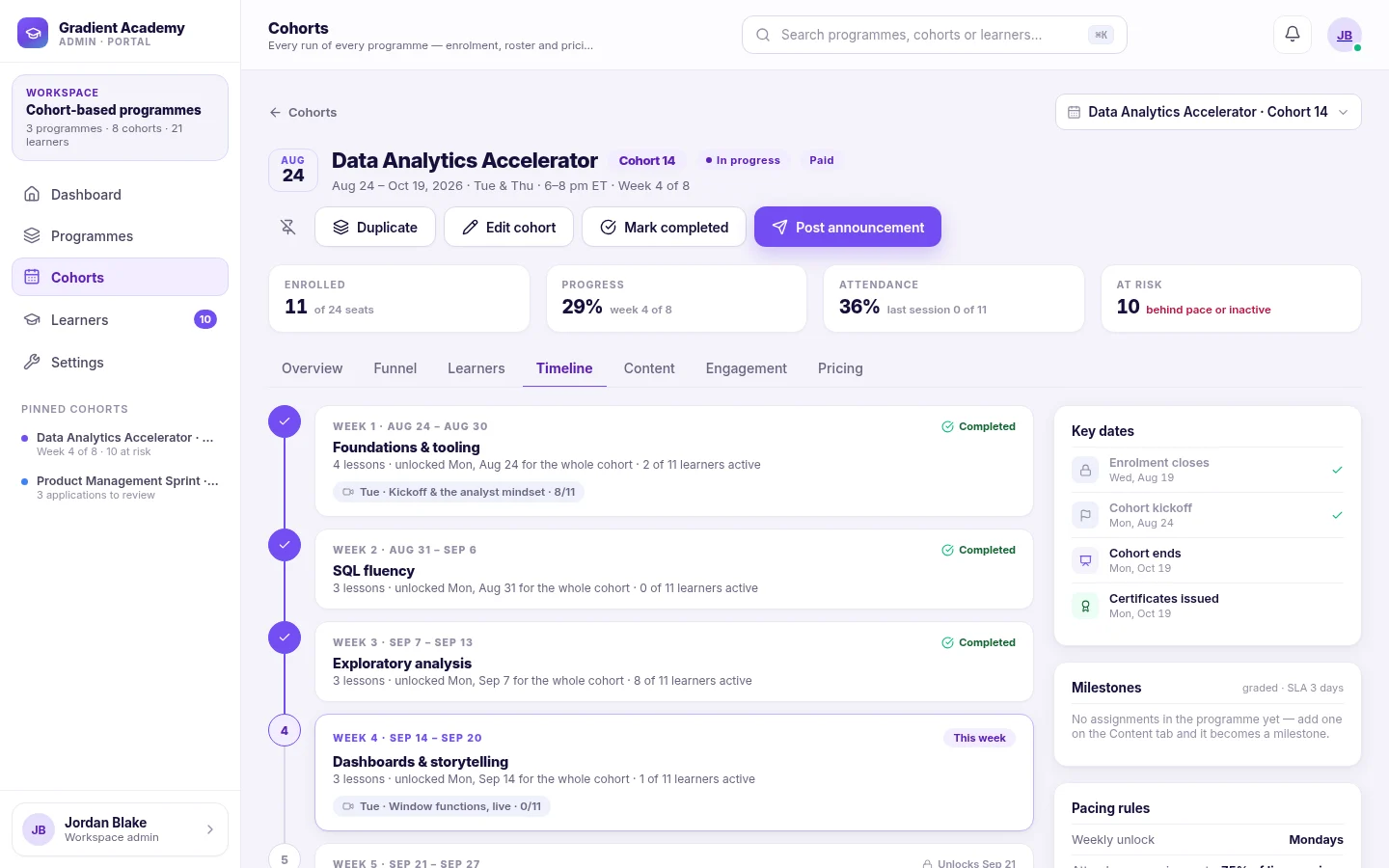
A cohort is one scheduled run of one program. The program holds the content; each cohort adds its own dates, weekly schedule and roster. Some of what that gives the group:
- The program's modules become the cohort's weeks, and each week unlocks for the whole cohort on schedule.
- Learners see the weekly schedule, such as "Tue & Thu · 6–8 pm ET", on the cohort page and in their portal.
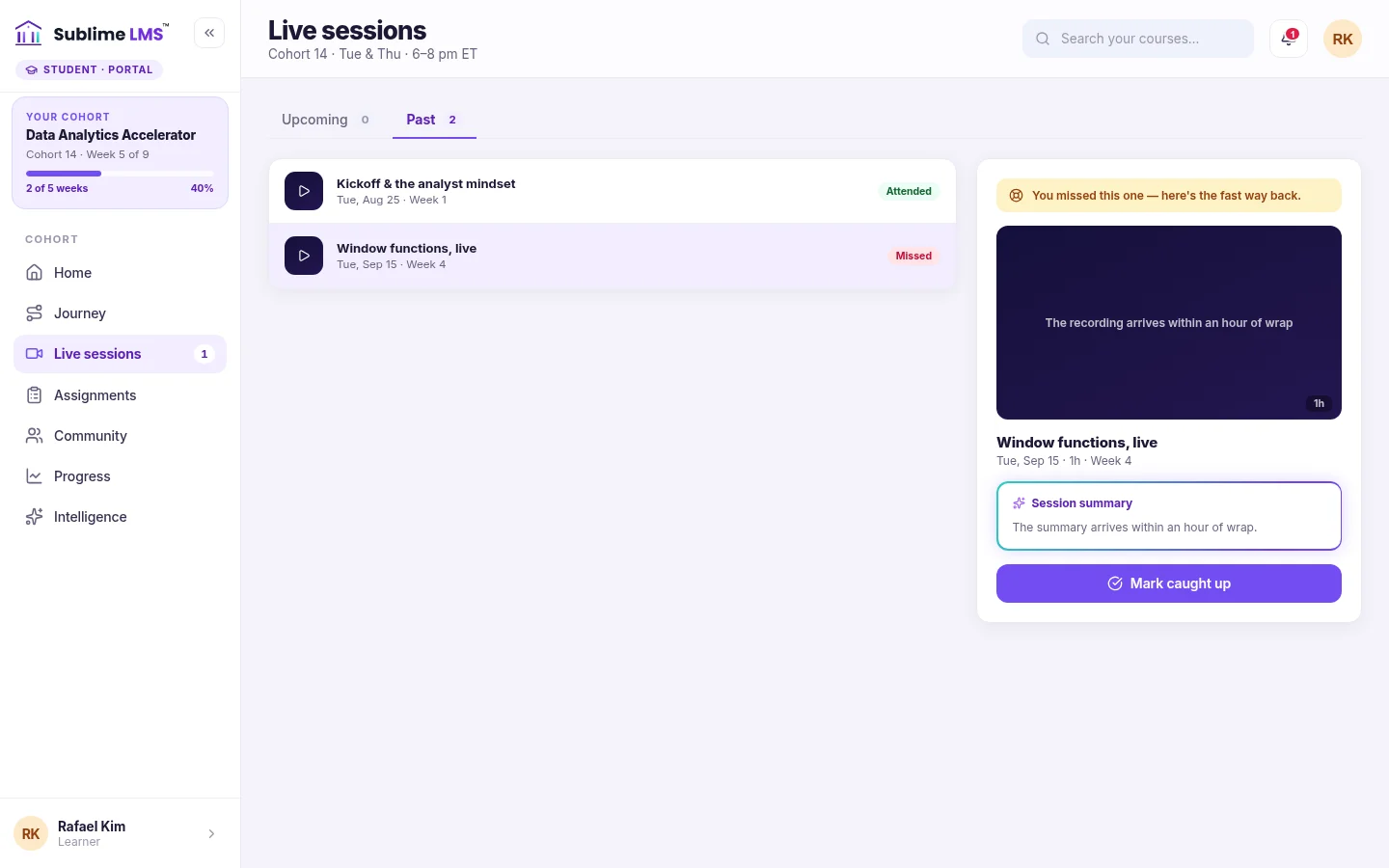
- Live sessions have a join link, reminders and an add-to-calendar file, and recordings stay available afterwards.
- Administrators can post announcements to the whole cohort.
Running the next intake of the same program is a new cohort, not a copy of the course, so each group keeps its own rhythm.
Related feature: Cohort management
When self-paced is the right call Link to “When self-paced is the right call”
Not everything needs a cohort. Short compliance refreshers, reference material and just-in-time training usually work better assigned to people individually, when they need them. Sublime LMS runs both: training workspaces assign courses directly, cohort workspaces run programs in weeks.
Related feature: The learning experience
Related articles
-
Designing a cohort learners want to show up for
Content gets learners to enroll. The week-to-week experience of the group is what keeps them coming back. 2 min read -
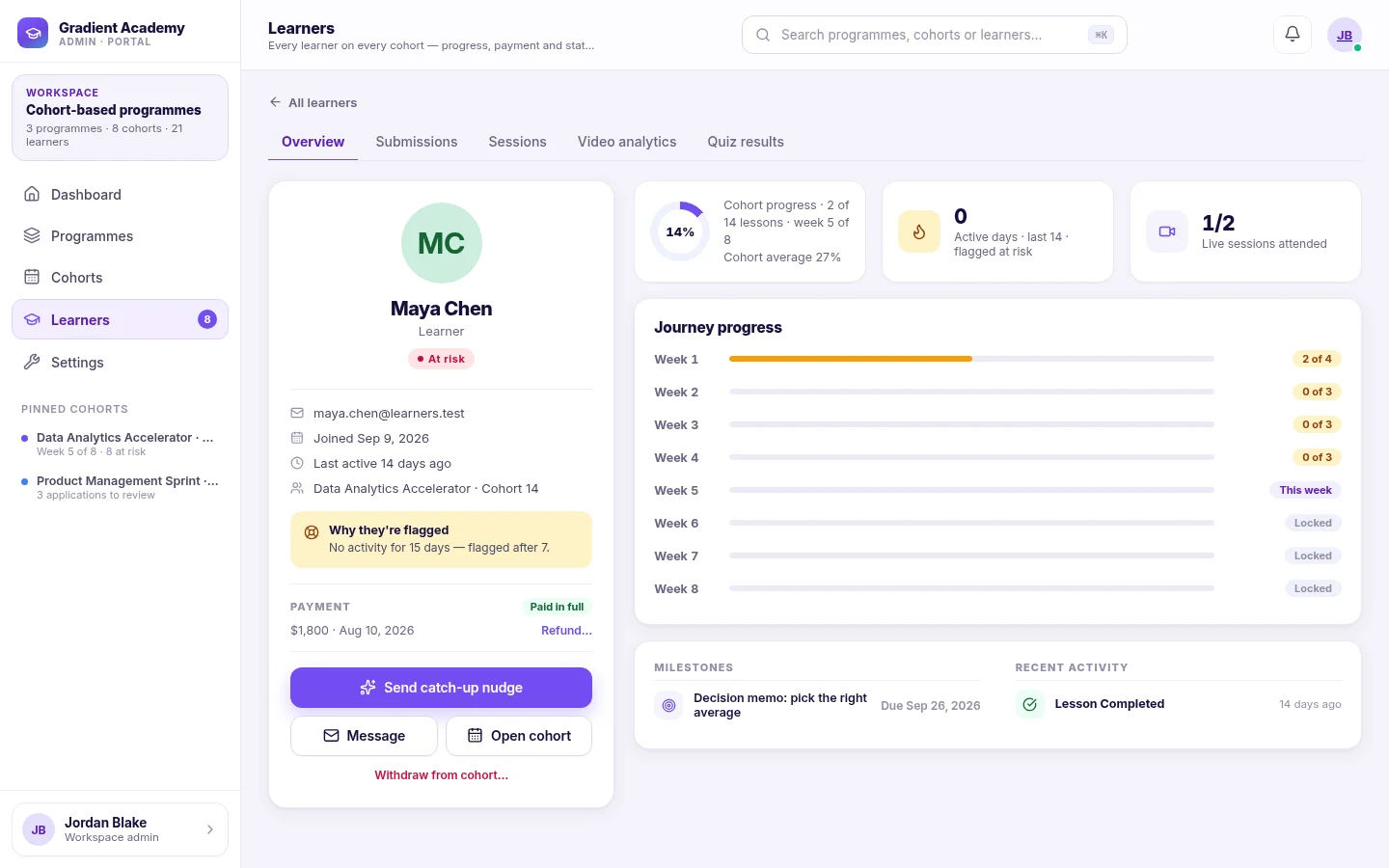
What “at risk” should mean in a cohort program
A risk flag is only useful if everyone agrees what it means and what happens next. Why a plain, explainable definition beats a clever score. 3 min read -
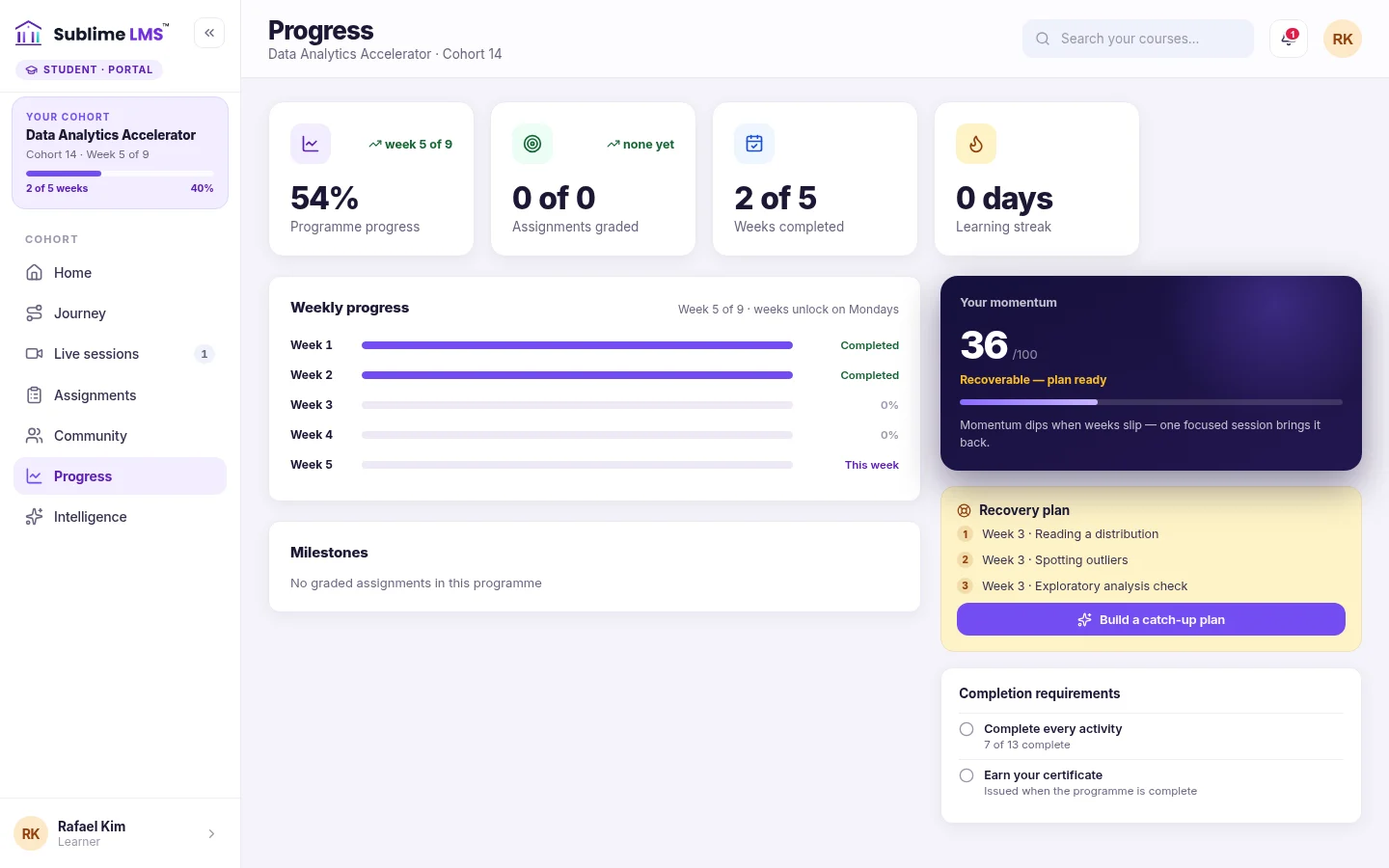
Recovery beats prevention: make coming back small
You can't stop every learner from having a bad week. You can make the way back short enough that they take it. 2 min read